Colleen Thibaudeau (1925-2012) in 1977 in London, Ontario. Colleening 2025 is a year-long celebration of Colleen Thibaudeau’s poetry.
Colleening 2025 in St. Thomas, Ontario
September 2025 — On September 18, celebrate Colleen Thibaudeau’s centenary with a feast of her St. Thomas poems read by local fans including Joe Preston, John Allen, Julie Berry, Barb Hoskins, Mike Baker & more!
Where: The Elgin County Railway Museum, 225 Wellington Street, St. Thomas When: Thursday, September 18, 2025, 7-9 pm Cash Bar — Admission is free.
Colleening 2025 in London, Ontario
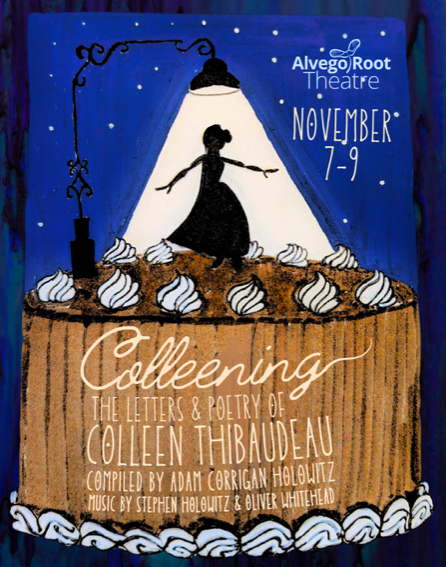
November 2025 – On November 7-9, AlvegoRoot Theatre presents a brand new concert version of Colleening: The Letters and Poetry of Colleen Thibaudeau, which premiered in 2013.
Compiled by Adam Corrigan Holowitz with music by Stephen Holowitz and Oliver Whitehead, Colleen’s letters and poems take us on a journey through childhood memories, home life, and Canadian culture. The performers are Katy Clark, Paul Grambo, and Kydra Ryan.
Where: The Manor Park Memorial Hall, 11 Briscoe Street W, London, Ontario When:Friday November 7 at 7:30 pm and matinees at 2 pm on Saturday November 8 and Sunday November 9.
Colleening: The Life & Letters of Colleen Thibaudeau, November 7-9
On Saturday November 29, poet Peggy Roffey presents “Colleen Thibaudeau’s Big Sea Vision” at the 2025 James Reaney Memorial Lecture. This year the annual lecture, in the spirit of metaphor, steps to the side and shows the “she” beside the “he”: James Reaney’s wife, poet Colleen Thibaudeau (1925-2012). Presented by London Public Library and Words Festival.
Where: London Public Library, Central Library Lawson Room, 251 Dundas Street, London, Ontario When: Saturday November 29, 1 pm. Admission is free.
On Wednesday December 3, Antler River Poetry presents Celebrating Colleen Thibaudeau: An Evening of Poetry and Memories. A lineup of well-known local poets and readers will share their favourite work by Canadian literary legend Colleen Thibaudeau. Where: The London Public Library, Landon Branch, 167 Wortley Road, London, Ontario When: Wednesday December 3, 7 pm. Admission is free.
For more about Colleen Thibaudeau and her poetry, see the biography on her website.
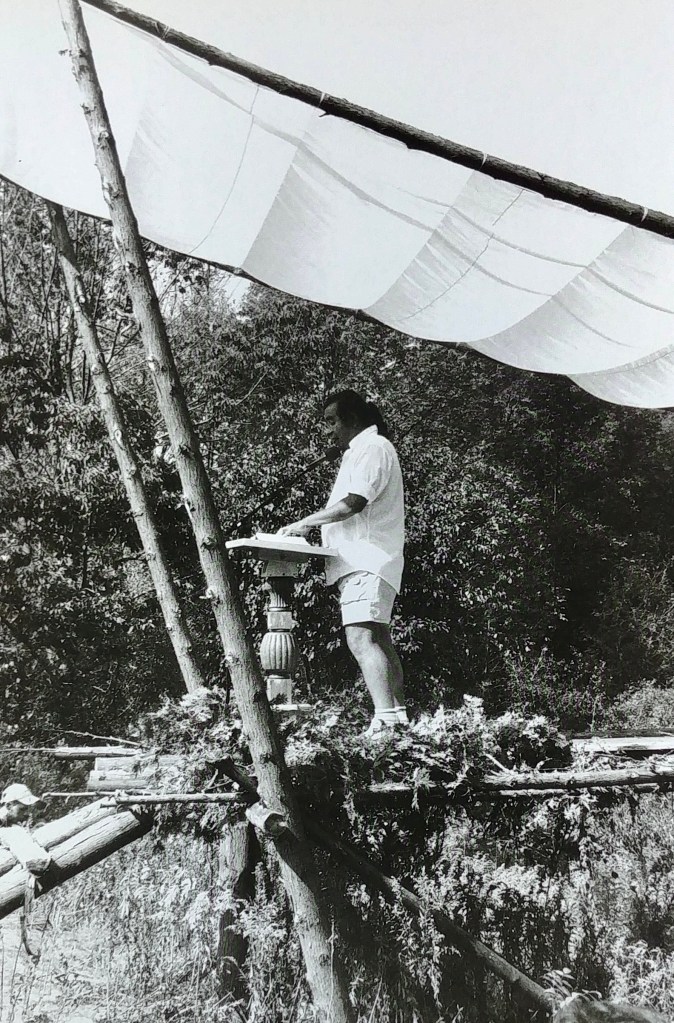
James Reaney (left) directing Tomson Highway and others in a scene from Wacousta, Fall 1976 (Image courtesy Western University Archives, James Reaney fonds AFC 18)
In 1976, James Reaney began working on Wacousta!, a new play based on John Richardson’s 1832 novel. Londoners, NDWT actors, and Western students helped develop the play through a series of workshops directed by Reaney at the University of Western Ontario’s Drama Workshop.
Playwright Tomson Highway, who was studying at Western that fall, was a member of the workshop and the Cree language coach for the play. In a later reflection on “Our Own Literature,” he recalls his early days and how the impetus to write plays came from the discovery that other Canadian writers such as Margaret Laurence wrote about what they knew.
“I was born into an oral culture and an oral language (Cree). Up where I come from, caribou country, the extreme far north of the province of Manitoba […] there is no written language, certainly no English, French, or any other European language. […]”
At age 20 while studying at the University of Manitoba, he “…came upon the writings of Margaret Laurence, whose stories took place in Neepawa, Manitoba, mere miles west of Winnipeg, a town I’d travelled through and whose cemetery I’d seen, from a distance many times and I thought that that stone angel in the imagined cemetery (never having seen it up close) must surely be the most magical stone angel in the history of the universe. […]”
“And then later on of course I met him in the flesh – shook his hand! – I met the poet/playwright James Reaney who wrote about London, Ontario where I was going to university. And then there was Michel Tremblay, over in Montreal, with that country-and-western goddess Carmen, singing her songs of love and sorrow on “the Main.”
“Well that was it. I decided that when I grew up I was gonna be like James Reaney and Michel Tremblay and Margaret Laurence and all the rest of them. I was gonna write stories that took place among my people inside the mythology of my people, vibrant, colourful – every bit as vibrant and colourful and passionate (yes, and tragic, sometimes) as people in New York and London (England) and Paris and Moscow. Yes, I decided, we were gonna have our own literature…in Cree.” [Excerpted from Reading Writers Reading: Canadian Authors” Reflections, Danielle Schaub – Photographer and Editor, University of Alberta Press and The Hebrew University Magnes Press, 2006, page 48.]
For more about Tomson Highway and his plays The Rez Sisters, Dry Lips Oughta Move to Kapuskasing, and Kiss of the Fur Queen, see tomsonhighway.ca and the Canadian Theatre Encyclopedia.
For more about the Wacousta Workshops (Fall 1976 to Spring 1977) at Western in London, Ontario, see James Reaney’s play Wacousta![A melodrama in three acts with a description of its development in workshops], Press Porcepic Limited, 1979.
Tomson Highway: lacrosse scene for Wacousta, Fall 1976 (Image courtesy Western University Archives, James Reaney fonds AFC 18)Tomson Highway and others — Wacousta workshops, Fall 1976 (Image courtesy Western University Archives, James Reaney fonds AFC 18)
Sometimes when I hold Our faded old globe That we used at school To see where oceans were And the five continents, The lines of latitude and longitude, The North Pole, the Equator and the South Pole— Sometimes when I hold this Wrecked blue cardboard pumpkin I think: here in my hands Rest the fair fields and lands Of my childhood Where still lie or still wander Old games, tops and pets; A house where I was little And afraid to swear Because God might hear and Send a bear To eat me up; Rooms where I was as old As I was high; Where I loved the pink clenches, The white, red and pink fists Of roses; where I watched the rain That Heaven’s clouds threw down In puddles and rutfuls And irregular mirrors Of soft brown glass upon the ground. The school globe is a parcel of my past, A basket of pluperfect things. And here I stand with it Sometime in the summertime All alone in an empty schoolroom Where about me hang Old maps, an abacus, pictures, Blackboards, empty desks. If I raise my hand No tall teacher will demand What I want. But if someone in authority Were here, I’d say Give me this old world back Whose husk I clasp And I’ll give you in exchange The great sad real one That’s filled Not with a child’s remembered and pleasant skies But with blood, pus, horror, death, stepmothers, and lies.
James Reaney, 1949
“The School Globe” is from The Red Heart (1949), James Reaney’s first book of poems.
You licker of precambrian rock I am your liker. You are both plant and sister To yeasts, moulds, rusts, mildews. Hungry for green. No stems, leaves, nor roots In you are seen And so You married yourself to a plant, Green plant wed to greenless you, And together you chew, chew Rock into earth, Precambrian into postcambrian, Helped, no doubt By the sun and her daughter, Water. O determined soil-maker, We all lie in the hammock Of your ceaseless patient work.
James Reaney, 2005
“Lichen” is from James Reaney’s book Souwesto Home, available from Brick Books.
Lichen photo courtesy Wikipedia: https://en.wikipedia.org/wiki/Lichen Xanthoparmelia sp. with dark-colored reproductive structures (disc-like apothecia) at center, surrounded by a pale coloured vegetative thallus.
Lichens are fungi that have discovered agriculture – lichenologist Trevor Goward
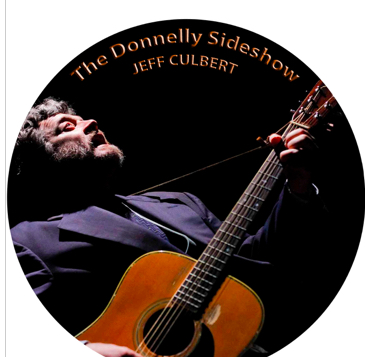
Thanks especially to our wonderful speaker, actor and director Jeff Culbert, who read poems from both One Man Masque and Souwesto Home and played songs from his “Donnelly Sideshow” collection. Jeff also spoke about directing Chris Doty’s play The Donnelly Trialin 2005.
Thanks also to Josh Lambier of Wordsfest for his work as host and guide to an afternoon of tales. Our wonderful audience members shared memories of being in James Reaney’s plays, including productions of One Man Masque at their high schools in North Bay and Sault Ste. Marie. Hilary Bates Neary, local historian and former Listeners’ Workshop member, remembered being in Listen to the Wind in 1966.
Thank you Sarah Caetano and the London Public Library for providing a home for this event. Next year’s lecture will look at poet Colleen Thibaudeau’sLozenges: Poems in the Shapes of Things and its publication by James Reaney’s Alphabet Press in 1965.
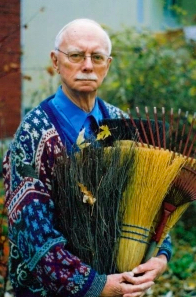
James Reaney in London, Ontario in 2005. Photo by Jeff Culbert.
The James Reaney Memorial Lecture series celebrates the life and work of Southwestern Ontario poet and dramatist James Reaney, who was born on a farm near Stratford, Ontario and found a creative home in London, Ontario.
James Reaney at home in London, Ontario in 2005. Photo by Jeff Culbert.
Join us on Saturday October 19 at the London Public LibraryCentral Branchin the Lawson Room for an afternoon of stories, songs, and memories as actor and director Jeff Culbert recalls his friendship with James (Jamie) Reaney and their collaborations.
Josh Lambier of Wordsfest will be our host and help Jeff recall his roles in the Reaney artistic process. Jeff has also curated selected readings and songs as snapshots on the tour.
Jeff Culbert’s family ties to Lucan and fascination with local lore led to his admiration for James Crerar (Jamie) Reaney’s The Donnellys trilogy, about the murders of an Irish immigrant family by their Lucan-area neighbours in 1880. In turn, Jamie Reaney enjoyed experiencing Lucan alongside Culbert as the two visited such attractions as Lucan heritage days.
“He was interested in my home town. That was so cool,” Culbert says.
Jeff Culbert’s The Donnelly Sideshow
The Donnellys and Lucan were only the start of the Jamie and Jeff friendship. At one point, Jeff was at the night of words and music when Reaney bounced a rubber ball in time to a poem by his wife, the late Colleen Thibaudeau. Reaney was often in the audience for plays with Culbert in the cast or director’s chair or both during London’s alt-theatre excitement in the 1990s and early 2000s. He laughed loudly watching Jeff as a drunken Irish-American police chief in alt-theatre spoof The Boneyard Man.
During that period, Culbert worked closely with Reaney to prepare for Jeff’s starring role in a revival of 1960’s One Man Masque. Jamie Reaney had starred in its debut decades before.
“It isn’t scholarly — but it is scholarly,” Jeff says of the friendship tour.
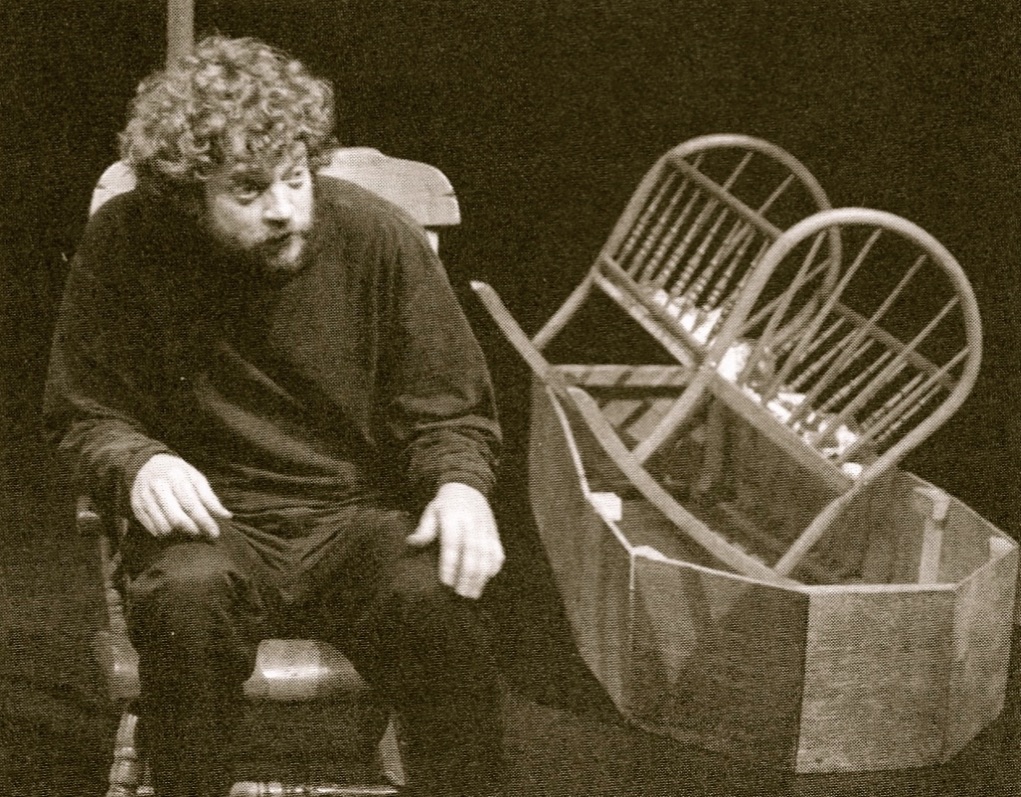
Jeff Culbert in One-Man Masque, Grand Theatre McManus Studio, London, Ontario, 2002
This year’s James Reaney Memorial Lecture celebrates the legacy of London poet and playwright James Crerar (Jamie) Reaney (1926-2008) and his late wife, the poet Colleen Thibaudeau. Our grateful thanks to the London Public Library and Wordsfest for giving the lecture a new home and partnership.
At The Congress Café in Austin, Texas, A group of men & women came in, Workers in some state office. They ordered drinks, then meals. After just twenty minutes, You could hear the drink they’d drunk Suddenly, happily, speak out in them. This sound of community went on until we left. I have no doubt that afterwards The drink they had taken Coupled some of them in matching ecstasies On Murphy beds.
How many things seek their voice in us? Unsuspected demons & angels Wait for the arrangement we provide Of gut, enzyme, funny bone, nervous system, mind.
Blood we lost long ago? (On Frederick’s great battle field When first he conquered Angria) Seeking to recirculate once more?
The apples of the orchard young Elmer Scheerer’s Father planted Which his son pressed into cider barrels, then drank Which then became his wild mouth organ music Played from a Pippin tree top, or (husband) on wilder bed spring, Printing press of his sons, Stanley & Geordie, Early friends of mine, O Congress Café.
James Reaney, 2005
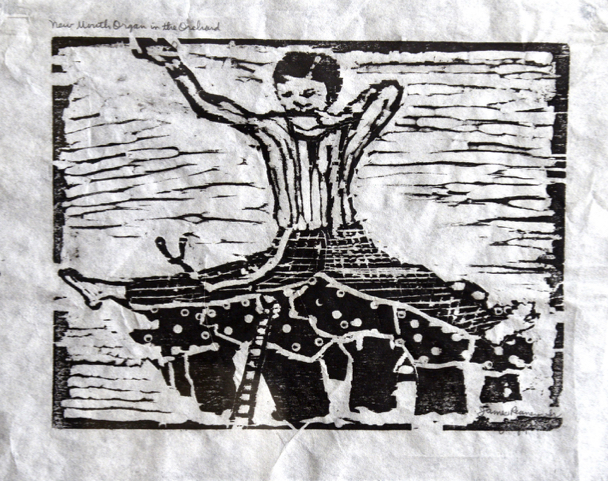
“New mouth organ in the orchard” Woodcut on paper by James Reaney (1988)
“The Congress Café” is from Souwesto Home, a collection of James Reaney’s poems from 2005 available from Brick Books.
( ( ( 0 ) ) ) Listen to Jeff Culbert read “The Congress Café” and other poems from Souwesto Home here.
He gives to me: a pebble
He gives to me: a dewdrop
He gives to me: a piece of string
He gives to me: a straw
Pebble dewdrop piece of string straw
The pebble is a huge dark hill I must climb
The dewdrop’s a great storm lake you must cross
The string was a road he could not find
The straw will be a sign whose meaning they forget
Hill lake road sign
What was it that changed the scene
So desert fades into meadows green?
The answer is that they met a Tiger
The answer is that he met a Balloon,
A Prostitute of Snow, A Gorgeous Salesman
As well as a company of others such as
Sly Tod, Reverend Jones, Kitty Cradle and so on
Who was the Tiger? Christ
Who was the Balloon? Buddha
Emily Bronte and the Emperor Solomon
Who sang of his foot in the doorway.
All these met him. They were hopeful and faithful.
Now the mountain becomes a pebble in my hand
The lake calms down to a dewdrop in a flower
The weary road is a string around your wrist
The mysterious sign is a straw that whistles “Home”
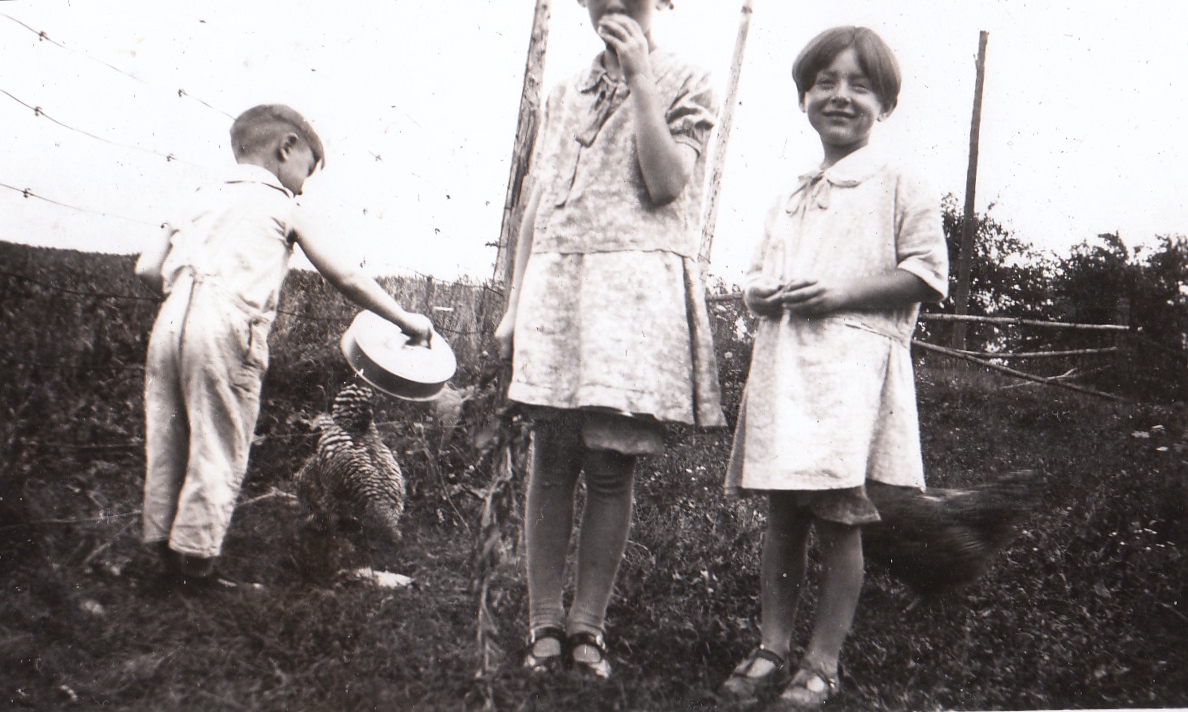
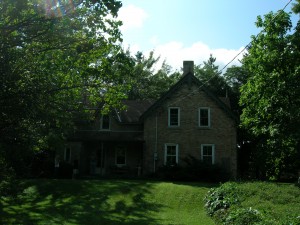
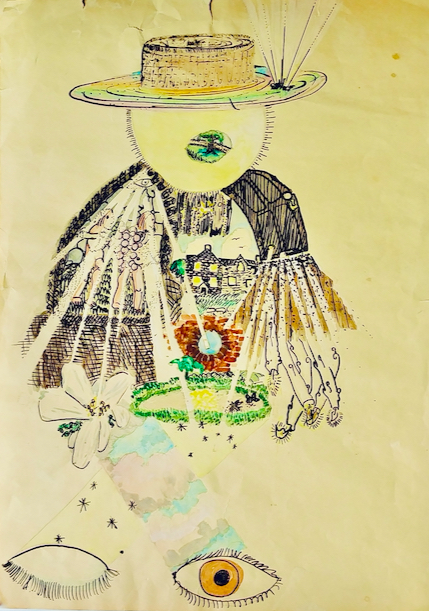
James Reaney (far right) with his cousins, Elsie, Kathleen, and Mary, Summer 1930 near Stratford, Ontario.James Reaney feeding the chickens (age 5) with his cousins Mary and Elsie (1931)James Reaney’s childhood home near Stratford, Ontario“Sun Clown” watercolour and ink drawing by James Reaney, 1960
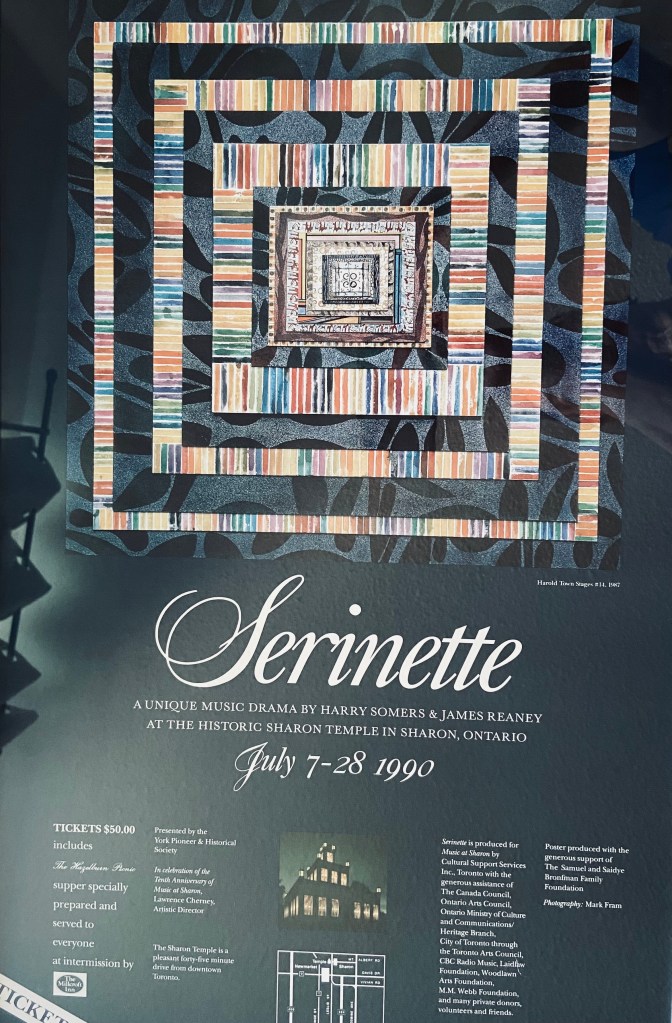
Composer Harry Somers (1925-1999) was commissioned by Lawrence Cherney, Artistic Director of Music at Sharon, to write the music in 1983. The story was to draw on the colonial era history of the Sharon Temple and the Quaker sect the Children of Peace. Seven years later, Serinette was complete and premiered on July 7, 1990 at the Sharon Temple.
July 7, 1990: Harry Somers celebrates at the Serinette premiere
Serinette July 7-28, 1990: Conductor: Victor Feldbrill, Director: Keith Turnbull Costume and Set Designer: Sue LePage Singers: Kristine Anderson, Lynn Blaser, Benjamin Butterfield, Jeffrey Carl, André Clouthier, Leslie Fagan, John Fanning, Carol Ann Feldstein, Dennis Giesbrecht, Aline Kutan, Brian McIntosh, Erik Oland, Jackalyn Pipher, Laura Pudwell
Harry Somers chose James Reaney to write the libretto: “Knowing James Reaney’s plays and his exceptional collaborations with John Beckwith, I was absolutely confident that he would produce a libretto that was suitable for setting to music. I knew that it would be dramatically rich in character and situation, and eminently theatrical. I’ve often been struck by how he uses simple and basic means to achieve a wide variety of theatrical effects, and how he uses a comparatively small cast with the greatest versatility.” [1]
James Reaney first learned about the Sharon Temple and the Children of Peace on a summer visit: “In 1944, while working at a farm labour camp in Holland Marsh, I received permission to walk into nearby Newmarket on business. Curiosity led me to take back roads; I was soon lost, and suddenly a pivot, a spiritual one, whirled into my life. Yes, I had lost my way, but I had also discovered an old square building made of wood and hundreds of panes of glass. It was the Sharon Temple, and as the years went by, its culture and religion became an obsession with me.”
“From John Beckwith, Keith MacMillan and Helmut Kallmann, I learnt that the musical and poetic tradition, as well as the left wing politics, of anglophone Canada started here. This was the site of the first commune based on Christian principles in Ontario, and these people created many original hymns, built the first organ, were the first to educate women in the crafts, and were the first to break down the barrier between artisan and artist. David Willson will always be one of my great folk heroes. [….] So, when Harry Somers asked me to write a libretto about nineteenth century life in Sharon, I leapt at an oft wished project, but decided not to be solemn.” [2]
Notes: [1] and [3] Harry Somers quoted in Serinette Program Notes, June 3, 1990. [2] James Reaney quoted in Serinette Program Notes, June 7, 1990.
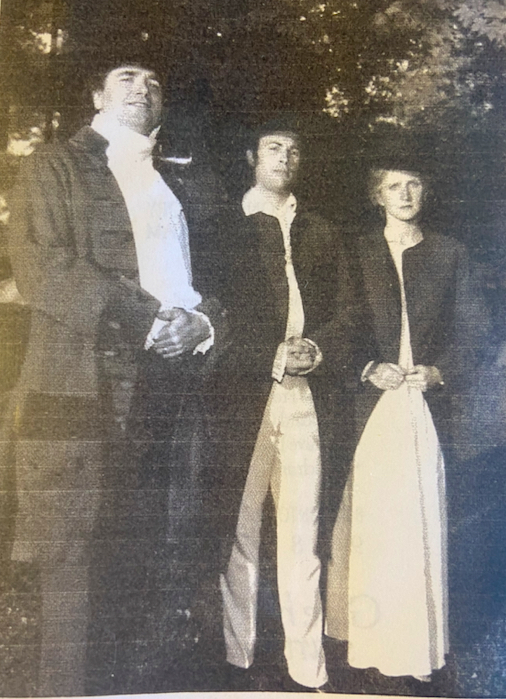
From Act I Scene 4: Three Quakers: John Fanning, Benjamin Butterfield, Jackalyn Pipher, July 1990Serinette Act I Scene 3: Leslie Fagan, the Bird Girl, among the Jarvis guests, July 1990Wild finch (The Bird Girl) design by Sue LePage (1990)
From Act I: Scene 3 The Bird Box
MRS. JARVIS: Mr. Jarvis, don’t let them start dancing. Quiet! I was about to show the ladies how this small barrel organ – the serinette you gave me, remember? – has taught our wild finch over there in that cage to sing Rossini. Sam Junior – take that sheet off that cage. Shhh!
(With great authority, Sam Jr. starts pulling the cover off the cage. The serinette begins to play, but its music goes wild as Sam inadvertently opens the door of the cage and the Bird Girl escapes. From being a bunch of voyeurs around a bird prison, the cast fan out to catch that bird! Improvise or compose chase music here. Colin and Ann do not take part in the chase. Eventually, Sam Jr. catches the bird and she is brutally shoved back into her prison and her cage is covered. As before, Sam Jr. ceremoniously pulls off the cover and as he does so, a singer in yellow dances in and repeats vocally the Rossini aria. Applause. Cover restored. Dancer off.)
LADY TWO: What else can it sing, Mrs. Jarvis? MRS. JARVIS: A month ago, that bird could not sing a thing worth listening to. LADY ONE: Oh, play another one, Mrs. Jarvis. Pray do. How many do you have on each barrel? Of this bird box? MRS. JARVIS: Two per barrel and we got twelve barrels! This is ‘O cessate di piagarmi, togliatemi la vita ancor.’ Hush!
(As the Lilliputian music sounds, the men retreat a bit.)
( ( ( 0 ) ) ) Audio excerpt from the 2001 revival recording
A concert revival of Serinette was held at St. James’ Cathedral, Toronto, Ontario with performances on May 31 and June 2, 2001, and a subsequent recording made at the Glenn Gould Studio is available from the Canadian Music Centre.
June 10-14 at Fanshawe Pioneer Village, Alvegoroot Theatre presents Take the Big Picture, a two-act play based on James Reaney’s 1986 children’s novel. Director Adam Corrigan Holowitz describes his adaptation as a story about a family in conflict with the modern world: The story:The Delahay family is more than a little off balance and seventeen-year-old…
In celebration of London’s bicentennial, the City of London launched the first Forest City Facts earlier this week at Gibbons Park on the Thames River. Each lawn sign displays a short historical fact about London people, places, and events. In partnership with the London and Middlesex Historical Society and other local history groups, Forest City…
To celebrate National Poetry Month, here is the “April” eclogue from James Reaney’s long poem A Suit of Nettles. April ARGUMENT: With Duncan as judge the geese hold a bardic contest in honour of Spring. [DUNCAN RAYMOND VALANCY] Here is a kernel of the hardest winter wheat Found in the yard delicious for to eat.…












 James Reaney